
Your whole business, in one place.
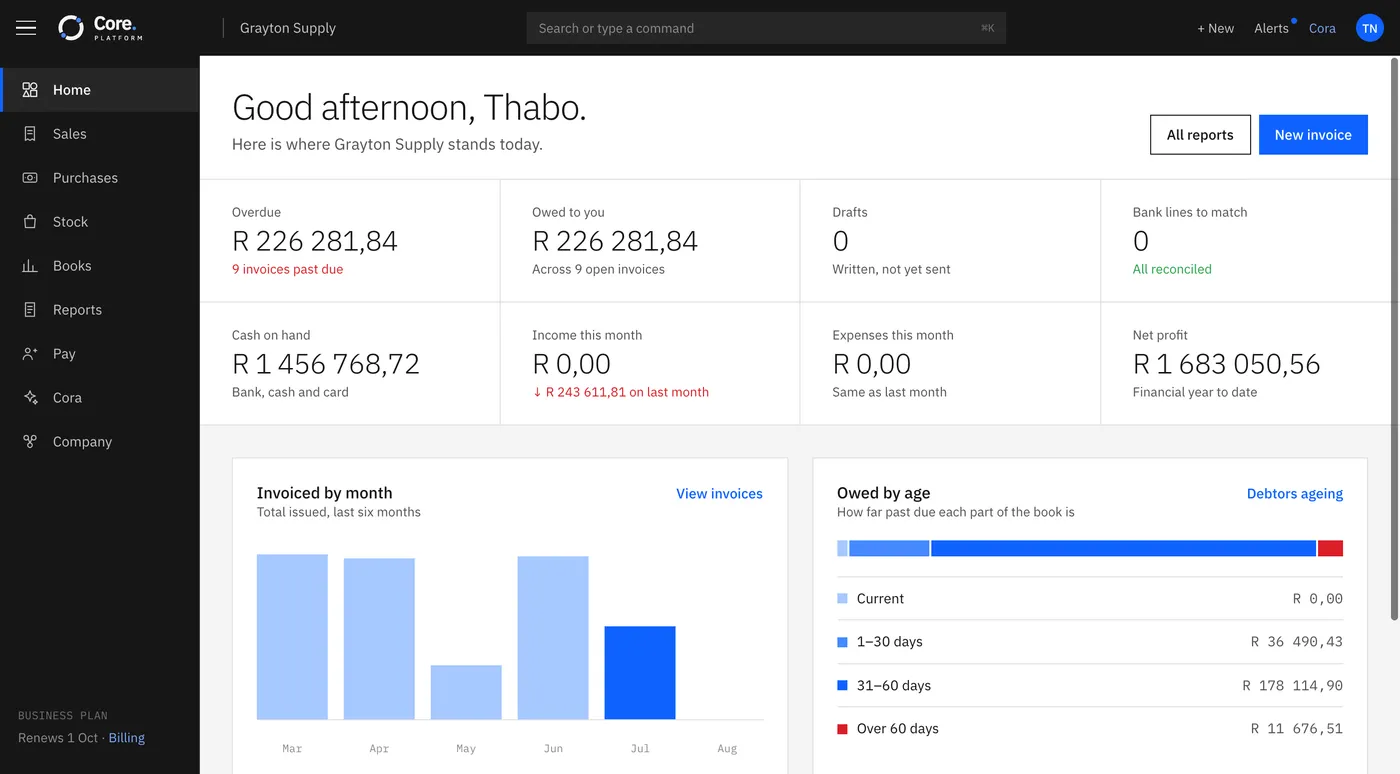
Invoices, stock, payroll and full double-entry accounting. All talking to each other. Made in South Africa.
Our most complete release yet.
Ready for real businesses, from day one. The warehouse management module becomes fully fledged and joins your accounts, invoices and payroll. Here is what changed.
Ten tools. One set of numbers.
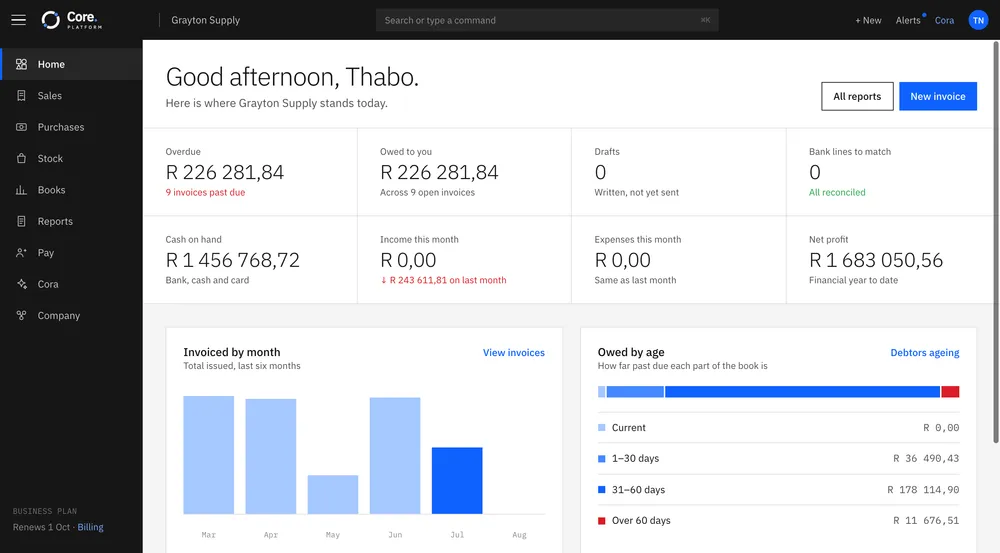
Send an invoice. Your stock and your reports update on their own.
From quote to paid.

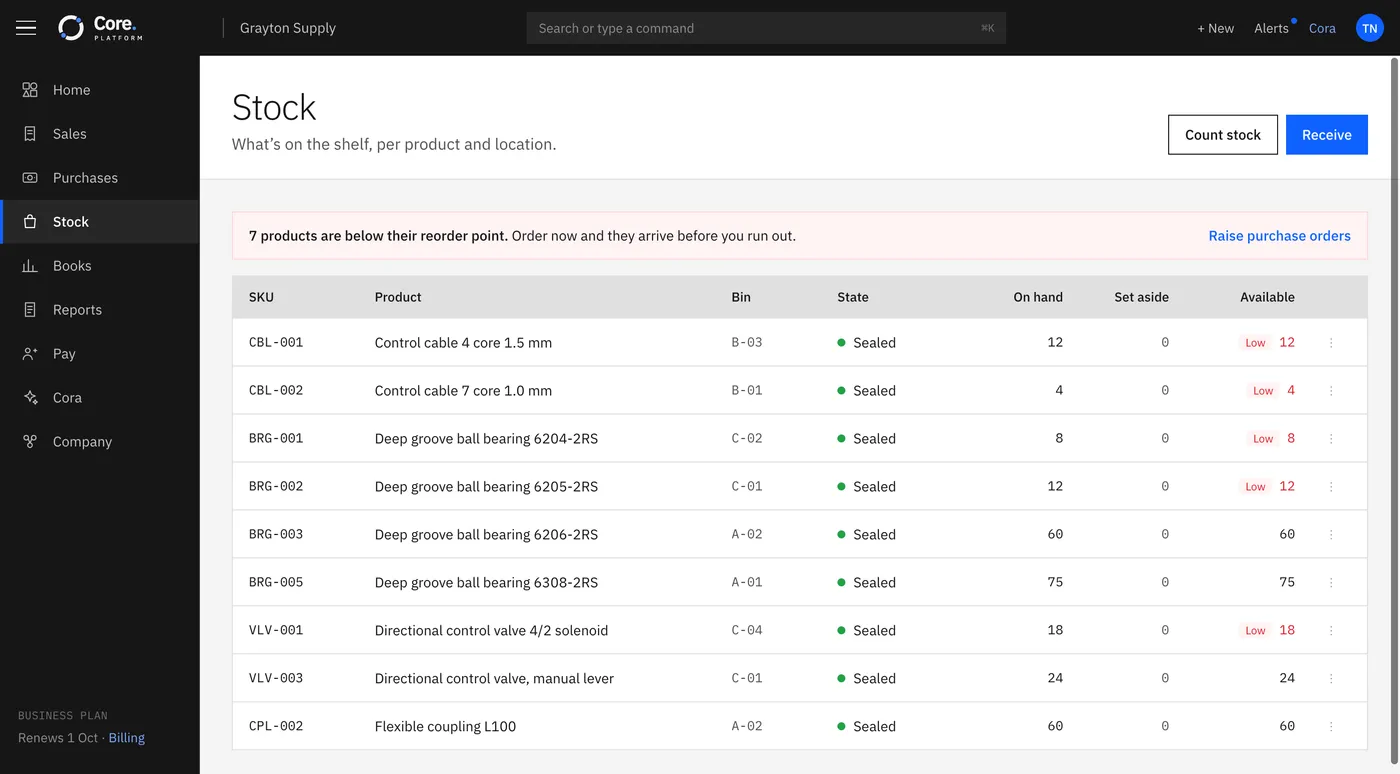
Know exactly what’s on the shelf.
Scan it in. Scan it out. Your stock and your books always agree. Systems like this usually cost R25 000 a month. This one’s included.
Pay your people. Tax handled.
Payslips on the 25th. PAYE, UIF and SDL worked out and filed. Leave that adds itself up.
Your accounts write themselves.
Import your bank statement. Core matches each line to an invoice or a bill. You confirm the one it wasn’t sure about.
Month-end, in one pack.
Ask for your management accounts and they’re ready. A trial balance that balances, and every report your bank, your board or your accountant will ask for. One PDF.
 FY26 · P6
Snap a receipt. Done.
Take a photo. Core reads the amount, the VAT and the shop, files it under the right account and asks the right person to approve. Cora does the reading, so it stays off until you switch it on.

A till that knows your stock.
Sell over the counter on a tablet or a phone. The shelf count, your accounts and the day’s takings update as the card taps.
The warehouse, on its own.
The part of Core people love most, as a product by itself. Bins, scanning, counts and returns. Nothing else to pay for.
Ask your business a question.
Cora answers from your real numbers and shows you where they came from. It stays off until you turn it on.
One price.
for your whole company.
Unlimited invoices. Unlimited people. Two of you or twenty, same price.
Send invoices. Get paid.
- Unlimited invoices, quotes and credit notes
- Everyone in the team, no extra cost
- Pay-by-link with Paystack, PayFast and NjiaPay
- A portal where customers pay what they owe
Invoices, plus your books.
- Everything in Core Invoice
- Full chart of accounts and journals
- Bank statement import and matching
- VAT201-ready the day you register
Everything. Stock included.
- Everything in Starter
- The full warehouse system
- Purchases, payroll and expenses
- CRM and your sales pipeline
On your desk. In your pocket.
Windows, macOS, iPhone and Android. Same numbers, same login. Works offline and catches up when you’re back.


 macOS · direct download
 TN
TNCurrently Building
These dates are our plan, not a promise. We’ll tell you the moment each one is ready.
CWMS
The warehouse on its own. Bins, scanning, counts and returns. R99 a month for qualifying small businesses.
Bring everything with you.
Your customers, suppliers and balances come across in an afternoon. Keep your old system until you’re ready.